

McDonald's: The Billion-Dollar Business Behind the World's Most Famous Burger
McDonald's built a global fast-food empire, but its business model goes far beyond selling burgers. Discover how franchising, real estate, brand power, and operational efficiency transformed a small restaurant concept into one of the world's most recognizable businesses.
McDonald's: The Billion-Dollar Business Behind the World's Most Famous Burger
Introduction: The Business Behind the Golden Arches
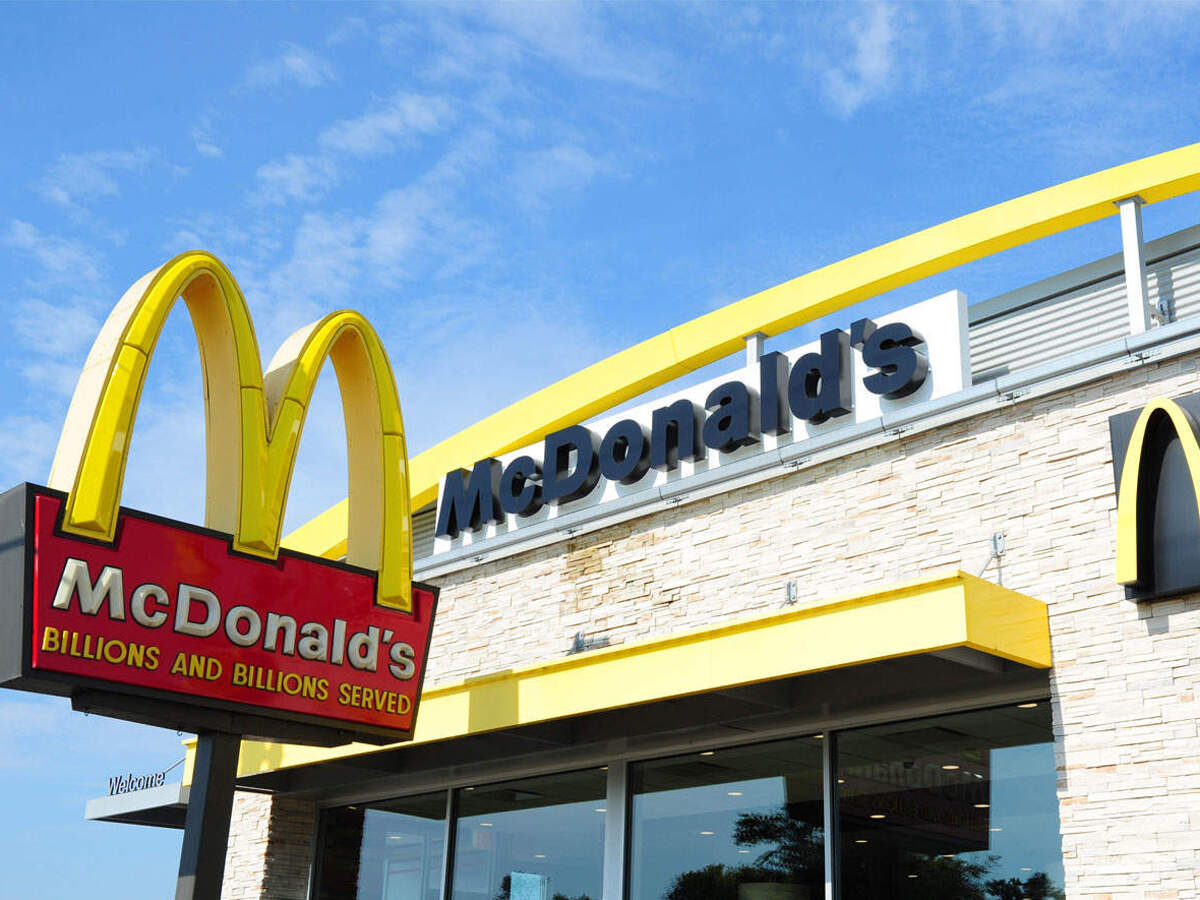
Every day, millions of people around the world visit McDonald's for burgers, fries, breakfast, coffee, and quick meals. Its Golden Arches are among the most recognizable symbols in global commerce.
But there is a deeper business story behind those familiar restaurants.
McDonald's is not simply a company that sells fast food. It is also a franchising business, a global brand, a highly standardized operating system, and a company whose relationship with real estate plays an important role in its financial model.
Understanding McDonald's means understanding how a business can turn an ordinary product into a repeatable global operation.
The company did not achieve its position through food alone. Its growth reflects decades of experimentation, operational discipline, franchise expansion, property strategy, marketing, and adaptation to changing consumer habits.
So how did McDonald's become a global giant, and what can entrepreneurs learn from its business model?
1. The Beginning: A Small Restaurant With a Different Idea
The story began with Richard and Maurice McDonald, two brothers who operated a restaurant business in California.
In 1948, they introduced a simplified restaurant system designed to serve customers quickly and consistently. Instead of treating the kitchen as a traditional restaurant where each order could require a different process, they focused on a limited menu and a more standardized production system.
The idea was straightforward: reduce complexity, improve speed, control costs, and make the customer experience more predictable.
The brothers emphasized a streamlined menu featuring popular items such as hamburgers, fries, and beverages.
This approach helped the restaurant operate more efficiently. Fewer menu choices meant fewer ingredients, simpler preparation, and a more repeatable process.
The business was not yet the worldwide giant people recognize today. However, it demonstrated an important principle: a restaurant could be designed as a system rather than relying entirely on individual employees improvising every order.
That principle would become central to McDonald's future expansion.
2. Ray Kroc: The Person Who Saw a Scalable Business
Ray Kroc entered the story in the 1950s as a salesman of milkshake-mixing machines.
When he encountered the McDonald brothers' restaurant, he recognized that their operating model could potentially be replicated across many locations.
Kroc joined the business and helped expand its franchise network. In 1955, he opened a McDonald's restaurant in Des Plaines, Illinois, and established the organization that became McDonald's Corporation.
His ambition was not limited to running one successful restaurant. He wanted to build a consistent system that could operate across cities and eventually across countries.
This distinction matters.
A single restaurant depends on its location, employees, and local management. A scalable restaurant system must also define its operating procedures, supplier relationships, franchise standards, training, and quality controls.
Kroc helped turn McDonald's into an expansion machine by treating each new location as part of a larger operating system.
The business still depended on food quality and customer demand, but its growth increasingly depended on how effectively the company could reproduce its model.
3. The Real Business Model: Franchising at Scale
One of McDonald's most important strategic decisions was to expand through franchising.
Under a franchise arrangement, an independent operator runs a restaurant using McDonald's brand, operating system, and approved products and procedures. In return, the franchisee pays fees and ongoing amounts under the terms of the agreement.
Franchising can allow a brand to expand without funding every restaurant entirely from its own balance sheet.
However, the economics are more complicated than simply allowing someone else to run a business.
A franchise system requires careful partner selection, training, quality control, contractual standards, supply-chain coordination, and ongoing oversight.
If the experience varies too much between locations, the brand becomes less reliable. If franchisees cannot operate profitably, expansion becomes harder to sustain.
McDonald's therefore needs to balance two objectives: protecting the consistency of its brand and maintaining an attractive business proposition for franchise operators.
Why Franchising Matters
Consider the difference between two expansion strategies.
In the first, a company opens and operates every new restaurant itself. It must fund construction or leases, equipment, staffing, inventory, and local operations.
In the second, it works with franchisees who invest in and operate restaurants under the company's system. The company can receive franchise-related revenue while sharing many of the local operating responsibilities.
The second model can support faster expansion and different capital requirements, although the company still carries substantial corporate costs, investment obligations, and risks.
For McDonald's, franchising has become a core part of its global business.
4. The Real Estate Connection: Why Location Is So Important
One of the most interesting aspects of McDonald's is the relationship between its restaurant network and real estate.
McDonald's has historically used a combination of property ownership, leasing, and franchise arrangements. Depending on the location and contract, the company may own or lease the underlying property and sublease it to a franchisee.
This can create an additional source of revenue beyond franchise fees and royalties.
Why is that important?
A restaurant location is not merely a place where food is prepared. It can also be a long-term commercial asset with value tied to its location, accessibility, customer traffic, and surrounding development.
When McDonald's participates in the property arrangement, its financial relationship with a franchisee can include rent as well as other contractual payments.
The exact structure differs across restaurants and markets, so it would be inaccurate to assume that McDonald's owns every location.
Nevertheless, the real estate component helps explain why its business model deserves more attention than a simple comparison of burger prices.
Does McDonald's Make Money From Rent?
Yes, rental income is an important component of the company's franchised restaurant economics.
But the details matter.
Revenue from rent is not the same as profit. Property ownership and leasing can involve maintenance, financing, taxes, capital expenditure, and other costs. Lease arrangements also create obligations and risks.
The strategic lesson is not that real estate automatically produces easy money. It is that a company can structure its business so that the same customer-facing operation supports several complementary revenue streams.
McDonald's combines food sales at company-operated restaurants with franchise-related revenue, which can include rent and royalties.
That diversified model is more complex than the popular idea that the company earns its money only by selling burgers.
5. How McDonald's Makes Money
McDonald's revenue model includes several distinct components.
A. Sales at Company-Operated Restaurants
McDonald's operates some restaurants directly.
In these locations, the company records revenue from food and beverages sold to customers. It also bears the related operating costs, including food, labor, occupancy, and other expenses.
The difference between revenue and these costs contributes to operating profit.
B. Franchise Royalties and Fees
Franchisees generally pay ongoing royalties and other fees according to their agreements.
These payments compensate McDonald's for the use of its brand, systems, and franchise relationship.
Royalty structures can vary depending on the contract and location. They should not be treated as identical across every market.
C. Rental Income
Where McDonald's owns or leases property and subleases it to franchisees, rental income can form an important part of the arrangement.
This gives the company an additional contractual relationship with some restaurant operators.
D. Initial and Other Franchise Fees
Franchise agreements may include initial fees and other payments associated with operating under the brand.
The amounts and terms depend on the agreement and market.
E. Brand and Operating-System Value
McDonald's brand strength supports customer recognition, demand, and the ability to attract franchise operators.
Brand value is not a separate cash payment automatically generated every time someone recognizes the logo. Rather, it helps support the company's wider commercial model.
Taken together, these revenue sources show how McDonald's has developed a business that extends beyond direct restaurant sales.
6. Standardization: Turning Restaurants Into Repeatable Systems
McDonald's is also a case study in operational standardization.
A global restaurant network cannot rely entirely on individual employees deciding how to prepare every product, manage every order, or organize every kitchen.
Instead, the company uses operating procedures, training, equipment, approved ingredients, and quality controls to make the customer experience more consistent.
Standardization has several advantages.
First, it can reduce unnecessary complexity. A more predictable menu and production process can help restaurants organize staffing and inventory.
Second, it supports training. Employees can learn established procedures rather than developing every task from scratch.
Third, it can help the company maintain brand expectations across many locations.
However, standardization does not eliminate operational problems. Restaurants still face staffing challenges, supplier disruptions, equipment failures, food-safety requirements, and local differences in demand.
The real advantage is the ability to manage these problems within a repeatable operating framework.
7. Supply Chain: The Hidden Infrastructure Behind Every Meal
A global restaurant network requires a dependable supply chain.
McDonald's needs ingredients, packaging, equipment, logistics, food-safety processes, and suppliers capable of supporting its restaurants.
This is a coordination challenge.
Products must meet specifications, deliveries must arrive on time, and restaurants must manage inventory without creating unnecessary waste.
Large-scale purchasing can provide negotiating advantages, while consistent requirements can encourage suppliers to develop specialized processes.
At the same time, a large supply chain creates exposure to commodity prices, transportation costs, labor conditions, extreme weather, and regulatory changes.
McDonald's scale can be an advantage, but it also increases the consequences of disruptions.
This is another lesson in business strategy: growth creates efficiencies, yet it also creates new forms of complexity.
8. Marketing: Selling a Familiar Experience
McDonald's has invested heavily in brand recognition, advertising, product launches, and customer loyalty.
Its marketing does more than announce that a burger is available. It reinforces familiarity and creates associations with convenience, recognizable products, family experiences, and affordable meals.
The company also adapts campaigns and menus to local markets.
That balance is important. A global brand needs a recognizable identity, but customer preferences differ across countries and regions.
McDonald's has adjusted menus and marketing in different markets while maintaining its central brand identity.
Its long-running products, distinctive visual branding, promotions, and digital ordering channels help it remain visible in a crowded food-service industry.
The wider lesson is that marketing works best when it reinforces a product and operating experience that the company can consistently deliver.
Advertising can attract attention, but long-term customer relationships also depend on price, convenience, service, and perceived value.
9. Technology and Digital Ordering
Modern fast-food competition increasingly involves technology.
Mobile applications, digital ordering, delivery partnerships, loyalty programs, and restaurant-level systems can influence how customers interact with a brand.
These tools can make ordering more convenient and help businesses understand purchasing patterns.
They can also support targeted offers and repeat visits.
However, digital channels involve technology costs, data protection responsibilities, integration challenges, and potential dependence on third-party platforms.
For McDonald's, technology is not a replacement for restaurant operations. It is another layer that connects customers, kitchens, delivery systems, and the broader business.
The strongest results occur when digital tools improve the underlying customer experience rather than simply adding complexity.
10. Competition: McDonald's Does Not Operate Alone
McDonald's competes with many types of businesses.
These include Burger King, Wendy's, KFC, local restaurant chains, independent fast-food operators, convenience stores, and other food-service companies.
Competition varies by country and product category.
Some rivals compete through lower prices. Others emphasize menu variety, premium ingredients, local flavors, delivery, or specialized products.
McDonald's must continually evaluate pricing, promotions, customer preferences, labor costs, and restaurant performance.
Its size and brand recognition provide advantages, but they do not guarantee that every restaurant will perform well.
The company must keep adapting to changing expectations around convenience, value, service, and food choices.
11. Risks Hidden Behind the Global Scale
McDonald's business model has strengths, but it also faces substantial risks.
Rising Costs
Food, wages, energy, logistics, and occupancy expenses can pressure restaurant profitability.
Consumer Spending
When household budgets are under pressure, customers may change their dining habits or become more sensitive to prices.
Franchisee Economics
Franchisees must generate enough cash flow to cover labor, food, rent, fees, debt, and other expenses. If their economics deteriorate, the company may face operational or relationship challenges.
Reputation and Food Safety
A major food-safety incident or widespread service problem can damage customer trust and create significant financial consequences.
Competition and Changing Preferences
Consumer tastes evolve. A brand that fails to respond to demand, price sensitivity, or new competitors can lose relevance.
International and Regulatory Exposure
McDonald's operates across many markets, exposing it to currency movements, local regulations, geopolitical developments, and differences in consumer demand.
A successful business model is not a guarantee against these risks. Sustainable performance requires active management.
12. What Entrepreneurs Can Learn From McDonald's
McDonald's provides several useful lessons for business builders.
Lesson 1: Build a System, Not Just a Product
A good product can generate initial demand. A repeatable operating system makes expansion more manageable.
Entrepreneurs should identify which activities can be standardized without sacrificing quality.
Lesson 2: Design the Business Model Before Scaling
Revenue, costs, customer acquisition, operations, and partner incentives must work together.
Expansion can amplify an effective model, but it can also amplify weaknesses.
Lesson 3: Make Partnerships Work for Both Sides
Franchising works only when the relationship creates a viable proposition for both the brand owner and the franchisee.
The same principle applies to distributors, suppliers, and strategic partners.
Lesson 4: Protect Brand Consistency
Customers develop expectations about a brand. Consistent delivery helps preserve trust.
A company that expands rapidly without maintaining standards can undermine its own reputation.
Lesson 5: Look Beyond the Obvious Revenue Stream
A restaurant sells food, but its economics may also involve franchising, rent, royalties, and other contractual payments.
Entrepreneurs should examine where value is created, who pays for it, and how revenue translates into profit and cash flow.
Lesson 6: Scale Requires Continuous Adaptation
A model that works in one market may need adjustments in another.
Businesses must preserve their core strengths while responding to local conditions and changing customer expectations.
13. The Bigger Picture: Why McDonald's Matters
McDonald's is important not only because it sells a huge number of meals, but because it demonstrates how a company can coordinate a global network of restaurants, franchisees, suppliers, properties, and customers.
Its history connects several areas of business strategy: standardization, franchising, real estate, branding, supply-chain management, and technology.
Its success cannot be explained by one trick or one revenue stream.
Instead, it reflects a combination of complementary capabilities developed over decades.
The company's model also illustrates an important distinction between revenue and profit. Large sales volumes do not automatically mean that every restaurant or business unit is equally profitable. The cost structure and contractual arrangements matter just as much as customer demand.
For anyone studying business, McDonald's offers a practical example of how strategy, operations, and financial structure work together.
Conclusion: The Real Lesson Behind the Golden Arches
McDonald's began with a restaurant concept focused on speed and simplicity. Over time, it developed a global system that combines recognizable products, franchising, property arrangements, standardized operations, supply-chain coordination, and brand marketing.
Its story shows that building a large business often requires more than creating something customers like.
It requires designing a system that can deliver value repeatedly, across locations, while aligning the incentives of the company, its partners, and its customers.
The next time you see the Golden Arches, remember that the visible product is only one part of the business.
Behind every restaurant sits a larger operating and financial system.
The biggest lesson: A strong business does not merely sell a product. It builds a repeatable model for delivering that product at scale.