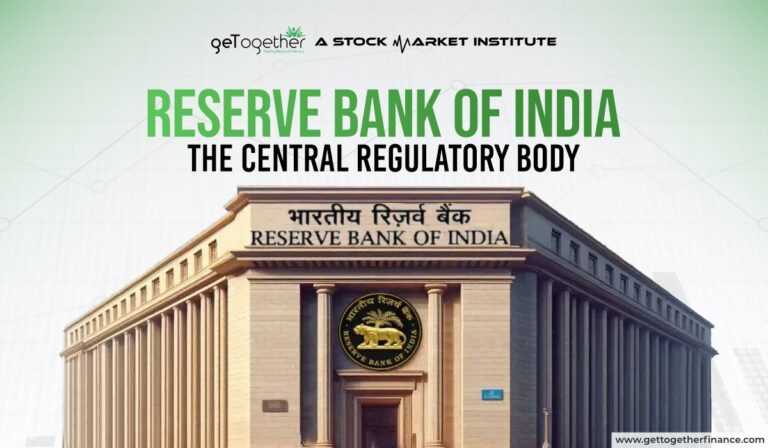
RBI’s Liquidity Move: Why India’s Banking System Is Entering a New Phase
India’s banking system is undergoing a significant liquidity adjustment. According to recent reporting, surplus liquidity fell from a record ₹11.16 lakh crore to ₹4.92 lakh crore, a decline of about 55%. The reduction has been supported by RBI bond sales, foreign-exchange swaps and seasonal tax outflows.
What Is Banking Liquidity?
Banking-system liquidity broadly refers to the amount of readily available funds within the financial system.
Banks need liquidity to meet payment obligations, manage withdrawals and provide credit. But when excess liquidity becomes very large, short-term market rates can fall and monetary-policy transmission can become more complicated.
The RBI therefore uses different tools to keep liquidity conditions aligned with its monetary-policy framework.
Why Is the RBI Absorbing Liquidity?
The recent surplus was partly linked to large foreign-currency inflows through a special deposit scheme. Reuters reported that banks had raised around $133 billion through the RBI's diaspora deposit scheme, contributing to the unusually large liquidity surplus.
The RBI subsequently used several mechanisms to absorb part of that excess cash.
These included:
Open-market bond salesForeign-exchange swapsReverse-repo operationsOther liquidity-management measuresThe objective is to manage financial conditions rather than simply remove money from the economy.
Bond Sales and Liquidity
When the RBI sells government securities, buyers pay for those securities, transferring funds toward the central bank and reducing surplus liquidity.
Reuters reported that the RBI sold ₹75,000 crore of bonds during one week and planned another ₹25,000 crore sale. Banks also parked substantial funds with the RBI through reverse-repo operations.
These operations can influence the relationship between liquidity, money-market rates and bond yields.
Why the Rupee Matters
Liquidity management is happening alongside pressure on the Indian rupee.
The currency is affected by several factors, including oil prices, dollar demand, foreign capital flows and global interest rates. Reuters reported that RBI intervention and liquidity operations were among the factors influencing recent rupee movements.
A weaker rupee can increase the domestic cost of imported goods, particularly commodities priced in dollars.
For India, crude oil is especially important because the country is a major oil importer.
Impact on Banks
For banks, changing liquidity conditions can affect the cost and availability of short-term funds.
When surplus liquidity is abundant, banks may have easier access to excess funds. When liquidity becomes tighter, money-market funding conditions can change.
The impact is not identical across every bank because institutions have different deposit bases, loan books and funding structures.
Impact on Borrowers
Liquidity conditions can eventually affect borrowing costs.
Businesses depend on banks for working capital, expansion loans, equipment financing and other forms of credit.
Consumers can also be affected through products such as home loans, vehicle loans and other floating-rate borrowing.
However, liquidity changes should not automatically be interpreted as an immediate increase in every lending rate. Actual lending costs depend on the RBI's policy rate, bank funding costs and individual loan benchmarks.
What About Interest Rates?
Market participants have been discussing the possibility of future RBI rate increases. Reuters reported that some economists expected potential rate hikes later in 2026. These are market and economist expectations, not confirmed RBI decisions.
That distinction is important.
The RBI's liquidity operations are current, observable actions. Future policy-rate decisions remain dependent on incoming economic data and the central bank's assessment.
Why This Matters for Investors
The liquidity cycle can influence several parts of the financial market:
RBI liquidity operations → Money-market rates → Bond yields → Funding costs → Credit conditions → Business activity
This is why a central-bank liquidity operation can eventually become relevant to companies, investors and consumers.
The Bigger Picture
India's financial conditions are also influenced by global developments.
Oil prices, U.S. interest rates, dollar movements, foreign portfolio flows and geopolitical developments can all affect the rupee and domestic financial markets.
Recent Reuters reporting has highlighted the interaction between oil prices, currency movements and RBI intervention.
The current situation therefore represents more than a simple banking-liquidity story. It is part of a broader interaction between monetary policy, currency management and global capital markets.
Key Takeaways
1. Surplus liquidity has fallen sharply, from ₹11.16 lakh crore to ₹4.92 lakh crore.
2. RBI bond sales and FX operations have helped absorb excess liquidity.
3. The rupee remains sensitive to oil prices, dollar demand and global financial conditions.
4. Borrowing conditions can respond to changes in banking-system liquidity, although the effect varies across lenders and borrowers.
5. Future rate moves remain uncertain and should be distinguished from current RBI actions.Conclusion
The RBI's liquidity operations show how central-bank decisions can move through the entire financial system.
What begins as a technical adjustment in banking liquidity can influence money-market rates, government bonds, currency markets and eventually the cost of capital for businesses and consumers.
For anyone trying to understand finance, the key lesson is simple:
Liquidity is not just a banking statistic. It is one of the mechanisms through which monetary policy reaches the real economy.